
If you’re responsible for facilities in a restaurant chain, you know how much your brand’s reputation depends on the comfort, safety, and reliability of every location. From keeping guests comfortable in the dining area to ensuring refrigeration and kitchen systems run smoothly, the facility director’s job is invisible, yet vital. When something fails — a rooftop unit stops cooling, the walk-in freezer loses temperature, or the air quality suffers — it’s not just an inconvenience. It can affect food safety, energy costs, and the overall guest experience.
Across multi-restaurant portfolios, HVAC systems, kitchen hoods, chillers, walk-in coolers, and rooftop units often operate on separate control systems. Many restaurants rely on a patchwork of legacy thermostats, timers, and building management systems (BMS) installed over different remodels or acquisitions. The result is limited visibility, inconsistent performance, and rising energy costs — especially when utility rates are tightening and sustainability goals are expanding.
The Evolving Role of Facility Professionals
Today’s facility professionals are expected to do more than fix what breaks. They’re strategic partners driving efficiency, sustainability, and operational resilience. Yet, the challenge is real. Each location might have different HVAC makes, various control systems, and site managers with different levels of technical comfort. For a portfolio spanning hundreds of locations, manual tracking and reactive maintenance processes may not scale efficiently. AI platforms are emerging as a tool to help address these challenges.
How AI platforms are Transforming Restaurant Facilities
AI-led facility management platforms can connect to building systems across multiple sites, gathering data from HVAC units, refrigeration systems, and kitchen equipment. Using this data, the platform can learn what “normal” looks like and detect when something starts drifting off track or recognizes patterns in the data. Think of it as having a digital co-pilot for every store. While your team focuses on operations, the AI continuously monitors performance and energy use across each store in your portfolio — enabling systems to run efficiently and alerting you to issues before they impact service.
A Success Story
A leading quick-service restaurant chain ran a 120-day AI platform pilot across 12 sites in varied climate zones. The system detected early signs of compressor wear and refrigerant leaks, optimized operating schedules, and cut energy use by 11% versus baseline. These results drove expansion to 200 locations, projecting $2.5M in five-year net cash flow from energy savings and fewer emergency calls.
What made the story a success? – The key enablers:
A. Sensors & Controls
Modern AI platforms need data and this case showed us that multiple data sources contributed to richer analysis of equipment performance which led to achieving the target outcome. The main sources required were:
- Smart Controllers: It is advisable to replace legacy thermostats, and enable remote adjustments and automation.
- Temperature Sensors: To monitor dining comfort and refrigeration compliance.
- Humidity Sensors: To maintain air quality and prevent mold.
- Energy Meters: For tracking real-time HVAC and refrigeration power use.
- Pressure Sensors: For detecting airflow issues in ducts and hoods.
AI analyzes these data streams to build baselines, detect anomalies, and recommend or execute corrective actions — far beyond legacy systems.
B. Interoperability & Upgrades
Older equipment require necessary upgrades to increase connectivity to the cloud:
- Gateway Devices: These bridge proprietary protocols to IoT standards.
- Sensor Retrofits: Add temperature, humidity, or energy sensors.
- Control Panel Upgrades: To replace outdated thermostats with smart controllers.
C. Duration of the Engagement
Time plays a major role. It is advisable to run pilots for 90–120 days to capture seasonal and operational data for ROI analysis. This allows AI to learn patterns, validate savings, and show predictive maintenance benefits.
Potential Benefits of AI
- Predictive Maintenance: Detects early signs of compressor wear, such as increased current draw.
- Energy Optimization: Adjusts AC setpoints and ventilation schedules based on occupancy and load.
- Data-Driven Insights: Highlights underperforming stores and potential causes.
- Continuous Commissioning: Finds and corrects operational deviations.
- Autonomous Control: In advanced setups, resets sequences, adjusts fan speeds, or switches to backups within safety limits.
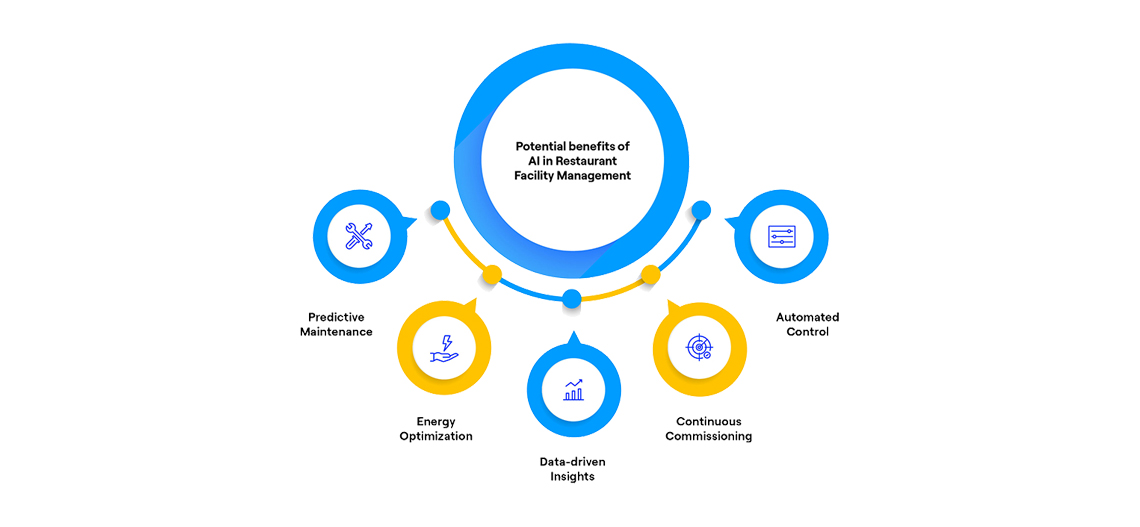
These capabilities transform maintenance from reactive to proactive, improving uptime and reducing energy costs. Users get the information they need to make data-driven decisions and do not have to rely purely on past experiences or intuition to apply the appropriate corrective action.
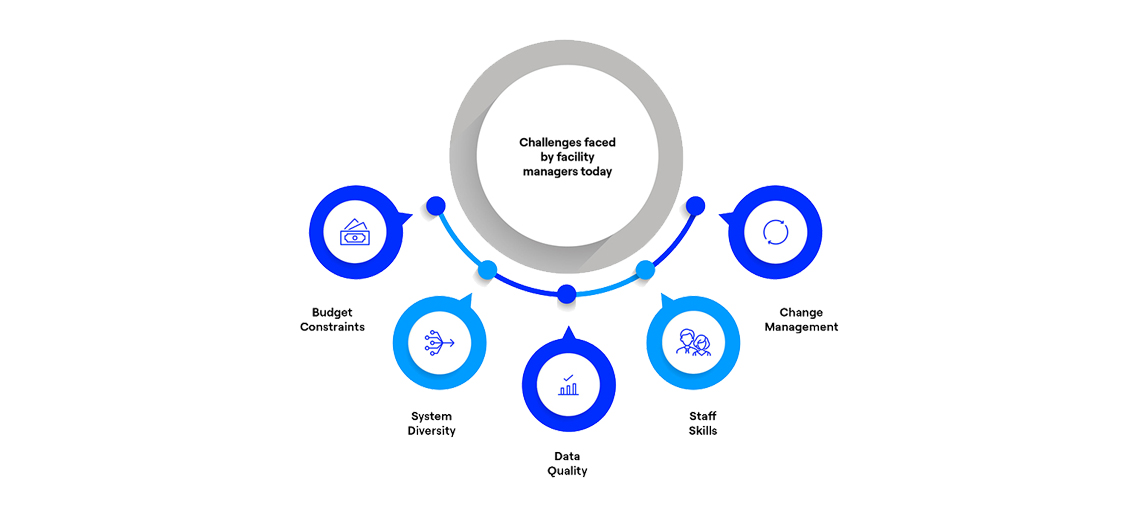
Challenges Facility Professionals Face
Adopting an AI-driven platform may appear straightforward, but facility directors often encounter several challenges:
- Budget Constraints: Technology investments compete with more visible upgrades. Demonstrating a clear ROI story is important.
- System Diversity: Restaurants may have rooftop units from different manufacturers, legacy controls, and proprietary BMS protocols.
- Data Quality: Poor sensor data or labeled points can distort AI insights. Data hygiene is critical.
- Staff Skills: Facility teams may need to adapt to reading dashboards instead of dials, and using insights rather than intuition.
- Change Management: Building trust in an automated system and integrating it into daily routines can take time, especially when traditional workflows have existed for years.
The Payoff: Efficiency, Reliability, & Insight
When implemented effectively, an AI-enabled facility program may deliver measurable results:
- Lower Energy Bills: Optimized operations can potentially reduce HVAC and refrigeration energy use by more than 20% (results vary based on implementation).
- Fewer Emergencies: Predictive analytics may highlight issues before they cause downtime.
- Improved Comfort: Stable temperatures in dining areas and back-of-house can improve staff productivity and guest satisfaction.
- Food Safety Assurance: Consistent monitoring of refrigeration may support compliance and reduce spoilage risks.
- Sustainability Gains: Lower energy use can align with corporate ESG commitments.
For national brands, these savings may multiply across hundreds or even thousands of locations.
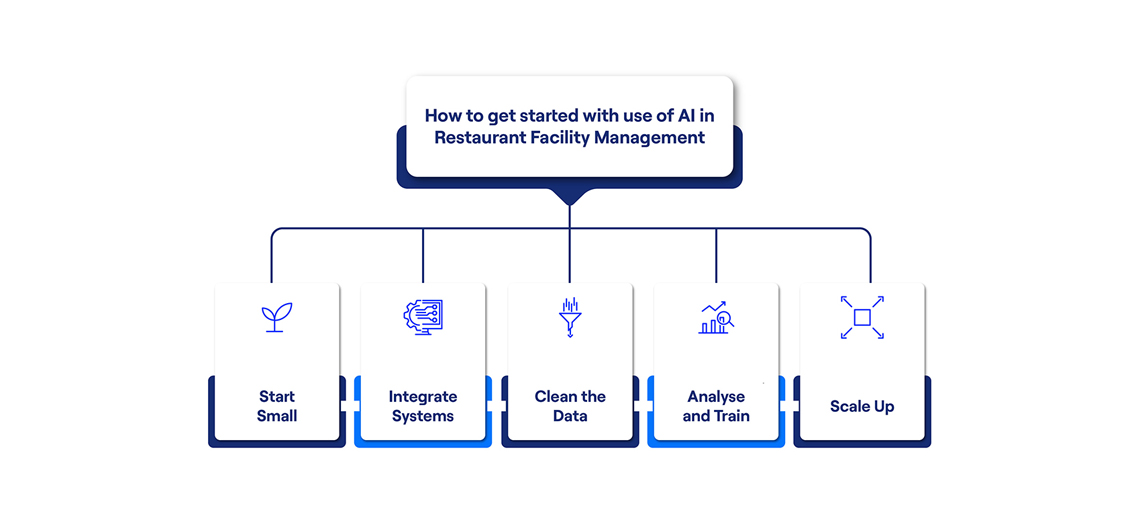
How to Get Started
- Start Small: Choose a group of 10–20 ‘test’ sites with different equipment types to evaluate performance and demonstrate ROI. Select sites from different climate zones for added variation.
- Integrate Systems: Connect HVAC, refrigeration, and kitchen controls through secure gateways or APIs.
- Clean the Data: Ensure sensors are calibrated, points are labeled, and equipment data is reliable.
- Analyze & Train: Begin by using dashboards and insights in your workflows. Set up these workflows before moving towards automating some aspects or workflows entirely, especially those that add more administrative burden to the team.
- Scale Up: Once proven, expand across the network and standardize best practices.
This phased approach can help build operational confidence while demonstrating business value. Sidebar: How AI Works in a Restaurant Facility Environment
- Data Collection: The platform gathers continuous data from HVAC units, refrigeration, and kitchen hoods.
- Learning Patterns: AI establishes performance baselines for each piece of equipment.
- Anomaly Detection: The system flags abnormal trends such as rising compressor energy or unstable temperatures.
- Recommendations or Actions: It suggests or automatically adjusts control sequences to maintain efficiency or meet setpoints.
- Verification: Energy and comfort improvements are verified against baseline performance.
The Human Element
Even the most advanced systems depend on skilled people. Facility teams remain essential to restaurant operations. AI doesn’t replace their expertise — it enhances it. With better visibility and accurate data, they can prioritize high-impact work over firefighting.
Upskilling staff in data interpretation and analytics is key. Training that blends field experience with digital literacy prepares teams for the next generation of intelligent buildings.
Looking Ahead
Restaurant brands are already competing on experience, convenience, and sustainability. Facilities now play a pivotal role in that equation. As AI platforms mature and appliances/equipment get smarter, it may become easier to launch autonomous actions — like optimizing HVAC, refrigeration, and ventilation in real time to maintain comfort and reduce waste, even before anyone notices an issue.
The facility professional of the future will be part technician, part analyst, and part strategist — using AI as a trusted ally in delivering consistent performance across every restaurant, every day.
Author Bio
Parminder Singh is Director – Offering Management and Pre-Sales Support, focusing on AI, IoT, and data-driven platforms that improve energy performance, predictive insights, and sustainability outcomes for multi-site customers in the restaurant, retail, and commercial sectors.