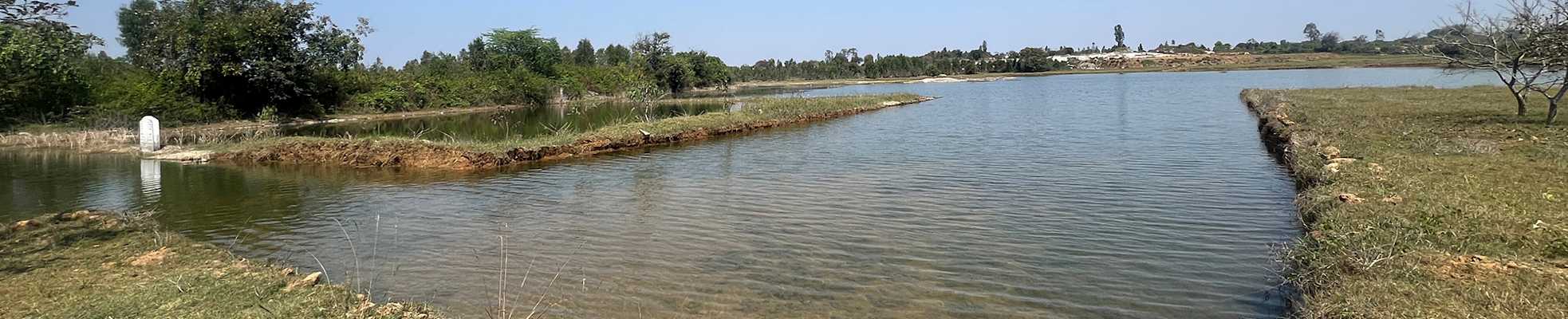
If you’ve read the story of the Bandahalli Doddakere Lake’s revival, you know about the importance of a lake’s flow in a drought prone village and how that flow can fade when silt and weeds take over. But, once the lake begins to flow and breathe again, the village can also look beyond the lake’s revival to the surrounding supporting structures, like the kalyanis (stepped wells), bunds (embankments or walls) and kaluves (feeder channels) that sustain the village’s routines, livelihoods and way of life.
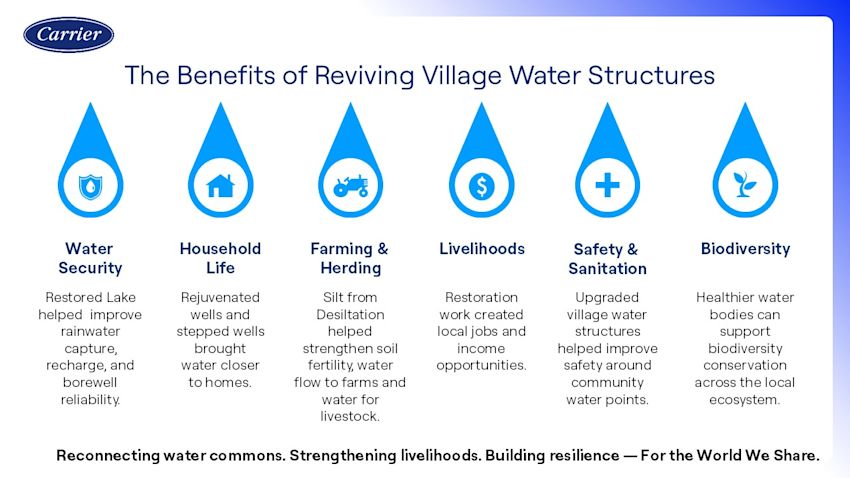
That is what has been unfolding across O Mittur Gram Panchayat, the area that encompasses a cluster of villages, including the villages of Bandahalli, Pichguntalahalli and Batlabhavanahalli. The effort to rejuvenate the kalyanis, bunds, and kaluves is being implemented through a partnership between Biome Environmental Trust and Arohana Grameenabhivruddi Samsthe (a women-led NGO), and enabled by funding from Carrier Abound, a part of Carrier Global Corporation.
Carrier Abound’s support has helped enable this next phase, taking the momentum of Bandahalli Doddakere Lake’s restoration and extending it into the structures villagers depend on daily.
In Indian rural water stories and folk songs, lakes often dominate the narrative. But in many households, daily security is shaped by open wells and kalyanis — the sources people once trusted for drinking and bathing, before borewells and overhead tanks became more commonplace. Over time, many of these traditional structures fell into neglect. Silt built up, waste was dumped, and dense overgrowth made them unsafe to access. Gradually, they slipped out of use. Restoring them is not glamorous work, but it is work that enables water to reach kitchens, schools, and the lived rhythms of a village.
In Pichguntalahalli village, this shift came into focus around a small kalyani. Between 2024 and 2025, the kalyani was rejuvenated to a depth of 18 feet, employing twenty villagers over 30 days.
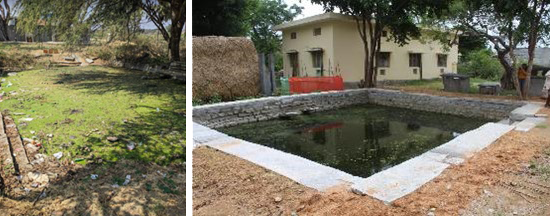
One village representative described some of the reasons to rejuvenate the Kalyani, and how things transpired:
“There are 120 houses in this village. The area was in bad condition. We needed to clean it up. We worked on the lake project and decided we need to do something for this Kalyani too. The villagers demanded that we do something about it. They requested that we act. Eventually, we decided to clean the area, and with the help of donations, we were able to do so. Earlier, our ancestors used to grow gardens all around this Kalyani, like leafy vegetable gardens and coriander gardens. They used to grow them and then take the water that overflowed and put it there. Now, the village is very happy that we can once again attempt this. They have also planned to use the water for drinking and bathing purposes. The donations have been put to good use, and the villagers are now very happy.” – Vishwanath
This villager’s account describes how the intervention did not begin as a top down plan; it began as a village demand, backed by the Gram Panchayat representatives. This was then carried forward by partners who could help translate that demand into solutions.
Villagers have also been seeing additional benefits of desilting. The silt collected from the Bandahalli Doddakere lakebed has been described as fertile; some farmers have said they can reduce chemical fertilizer use for up to three years and grow more crops with higher yields by using the silt collected. Nagaraj, a local farmer, shared that he previously may have harvested one to two sacks of paddy; now he harvests ten to twelve sacks, claiming he used no external fertilizer, only the silt. The improvement is not just agricultural. It strengthens livelihoods, improves living standards, and encourages more people to stay engaged in farming — creating more employment locally.1 Additionally, the Pichguntalahalli lake’s increased capacity supports over 1,800 sheep and goats with water during the summer, while also providing relief to the herders.
Another change villagers have mentioned is the rise in birds, insects, and fish in the lakes, improving biodiversity.2
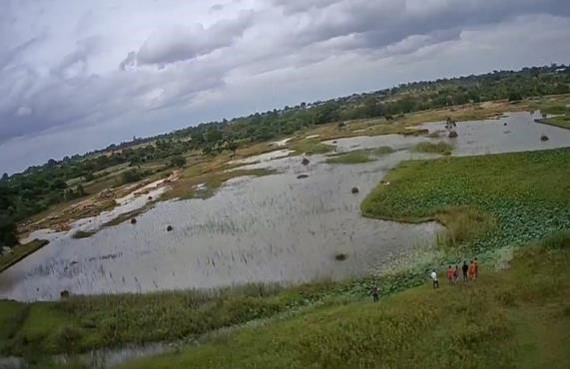
In Batlabhavanahalli village, the follow up story looks slightly different. Here, water restoration intersects safety and sanitation. Between 2024 and 2025, the project rejuvenated an open well and a kalyani with household-level benefits, including a well measuring 9 ft x 28 ft that supports water needs for 30 households, and a kalyani measuring 32 ft x 25 ft x 10 ft that supports improved safety and sanitation for about 30 children and 7 households.
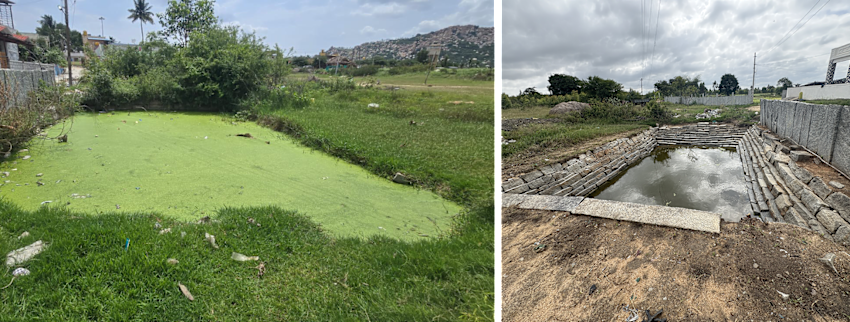
Additionally, between 2025 and the first few months of 2026, the kaluves (inlet channels that carry rainfall run-off from the catchment and direct it into the lake) connected to the Batlabavanahalli Doddakere lake were desilted by over 1,550 metres, employing thirty villagers for 20 days and improving water flow.
This combination of restoring storage structures and water flow is where the program’s method becomes clear. You can deepen a well or clean a kalyani, but if rainwater cannot travel through the system, the labour does not bear fruit. This is why feeder channels keep returning to the centre of the story.
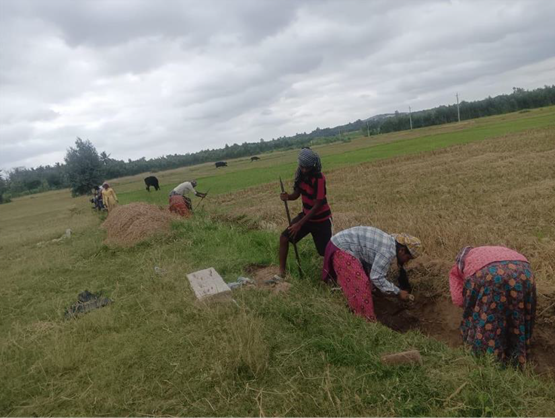
Desilting and rejuvenation can also help create temporary employment, which can lead to positive impact among the residents. One impact story from the Bandahalli desilting initiative describes a mother and daughter who had been travelling far each day for work. When desilting work opened in their own village, on the local kaluves, they took up the work and were able to earn and save enough to buy a cow.
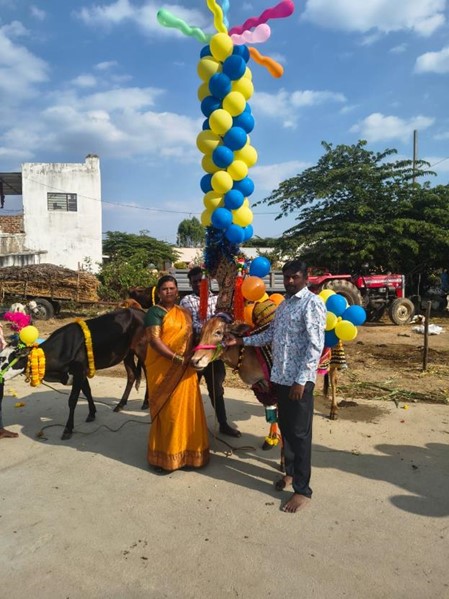
In turn, cattle ownership brought a steadier, recurring income through milk sales, and a step toward self reliance and financial stability. At the time of writing, the cow has also given birth to two female calves.
This story is an example of how water restoration benefits can go beyond support in providing water storage; it can also lead to economic benefit for the local population.
Future plans for the rejuvenation project include further desilting work around the Uppukunte lake (9 acres), with direct benefits for twenty farmers across two villages.
As this rejuvenation work continues to expand, Carrier Abound continues to enable transformation — supporting local partners and villagers as they strengthen water security and livelihoods.
It is purpose in action — For the World We Share.
1,2 Source: Meet The Woman Reviving Dying Lakes In Rural Karnataka